Tree Spraying in Winchester, VA
Treatment for the insects, mites, and diseases that show up on trees in this valley, applied before the damage gets away from you.
What We Treat For
Timing is most of the battle with tree pests. Almost everything on this list has a specific window where treatment works well and a much longer stretch where it barely helps at all.
Call when you first notice something, not in August when the leaves are already gone. Most of what we get called about is easy in May and near hopeless by the time the tree looks bad.
- Bagworms on evergreens, which have a narrow early summer window
- Spider mites, common on spruce and juniper in hot dry stretches
- Aphids and scale, usually noticed first because of the sticky honeydew
- Japanese beetles skeletonizing leaves in midsummer
- Eastern tent caterpillar and fall webworm
- Anthracnose and leaf spot fungal issues in wet springs
- Apple scab and cedar apple rust on ornamentals and fruit trees
How We Decide What to Do
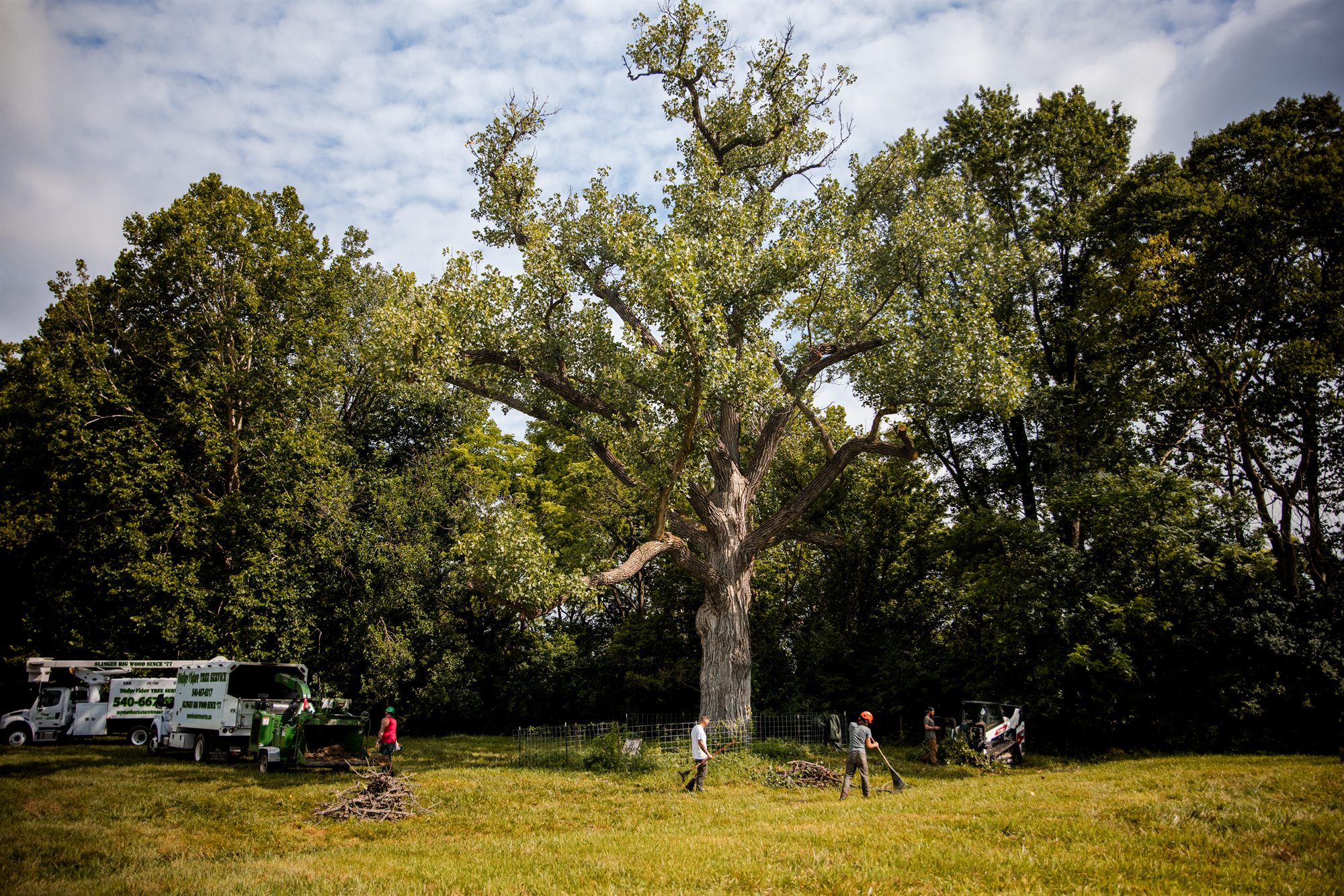
We identify the actual problem before recommending a product. A lot of what gets called a bug problem turns out to be a site problem, meaning drought, compaction, or a tree planted somewhere it was never going to thrive. Spraying does not fix any of those.
When treatment is the right answer, we go with the least aggressive option that will handle it. Horticultural oil and insecticidal soap take care of more than people expect, particularly on soft bodied insects caught early. We save the heavier products for situations that genuinely need them.
What Every Treatment Includes
The Price First
Free estimates, and a firm price in writing before anybody mixes a tank.
Insurance
Fully insured, general liability and workers compensation.
Diagnosis First
We identify the problem before we name a product.
The Right Window
Treatment goes on in the window where it actually works, and we watch the weather so it does not wash off the same afternoon.
What Comes Next
You hear how long to stay off the area and what to watch for. If it needs a second round we say so up front, not after.
The Phone
Somebody answers the phone 24 hours.
How the Job Goes
You Call
Tell us what the tree is doing and roughly when it started. A photo of the leaves helps more than people think.
We Come Look and Price It
We put eyes on the tree and identify what is actually wrong. You get a firm price in writing, and a straight answer if spraying is not the fix.
We Schedule It Right
Treatment goes on in the window where it actually works. We watch the weather so it does not wash off the same afternoon.
We Tell You What Comes Next
You hear how long to stay off the area and what to watch for. If it needs a second round we say so up front, not after.
Timing Through the Year
The calendar decides more than the product does. This is roughly how our year runs.
Dormant Season
Dormant oil on scale and overwintering mite eggs, before bud break. Quietly one of the most effective sprays there is.
Spring
Fungal preventives as leaves emerge, plus early insect activity. Wet springs make this the busy one.
Early Summer
Bagworms while they are still small. Miss this window and it gets much harder.
Midsummer
Japanese beetles, mites in dry heat, and webworm as it shows up.
What Drives the Price
Size and Count
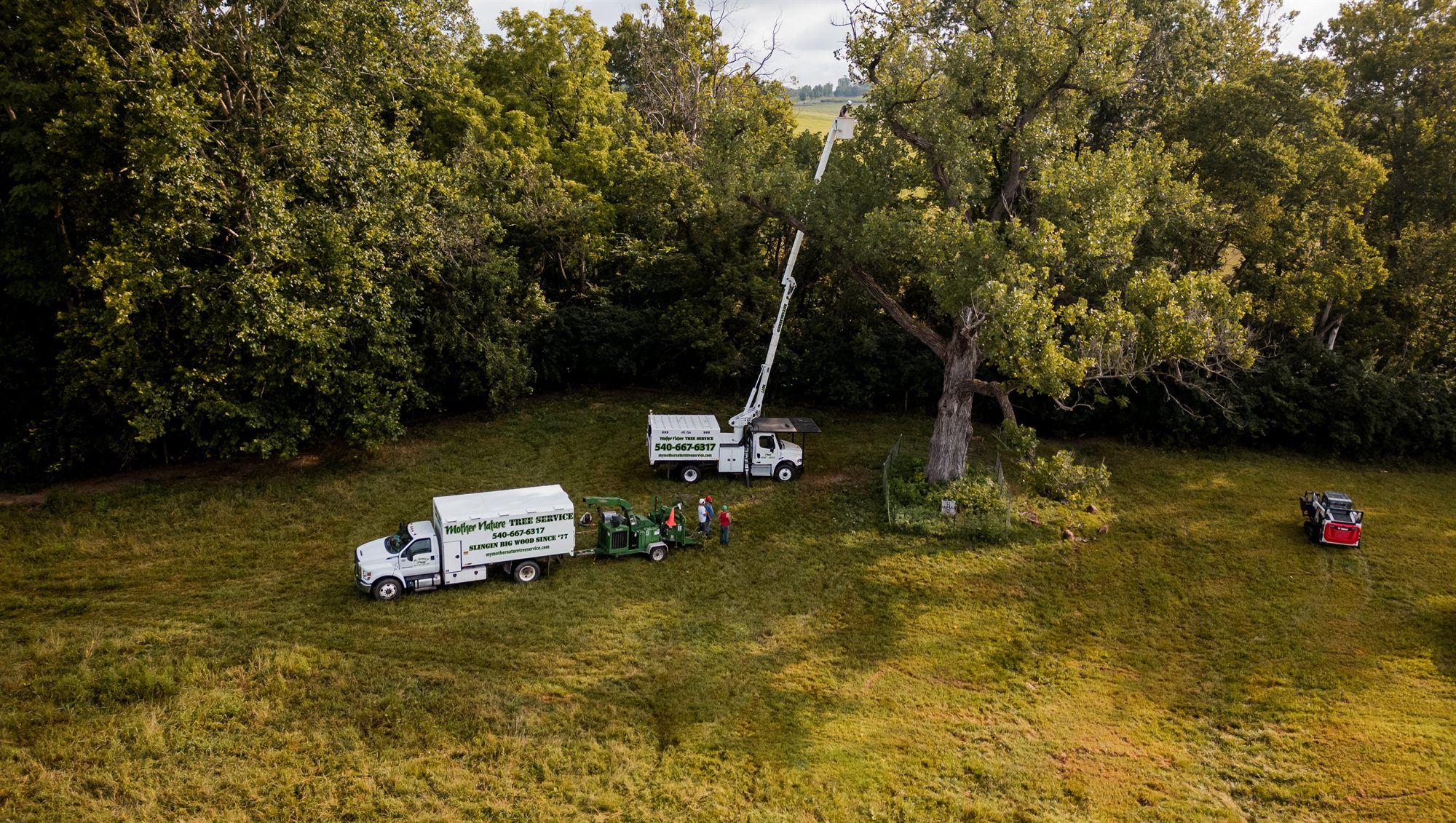
A row of small ornamentals is a different job from one mature oak with a sixty foot crown. Height and spread drive how much material it takes and how long we are on site.
The Problem
Horticultural oil on soft bodied insects is cheap. A systemic on a mature ash is not. We name the product at the estimate so you know what you are paying for before anybody mixes anything.
Reaching the Canopy
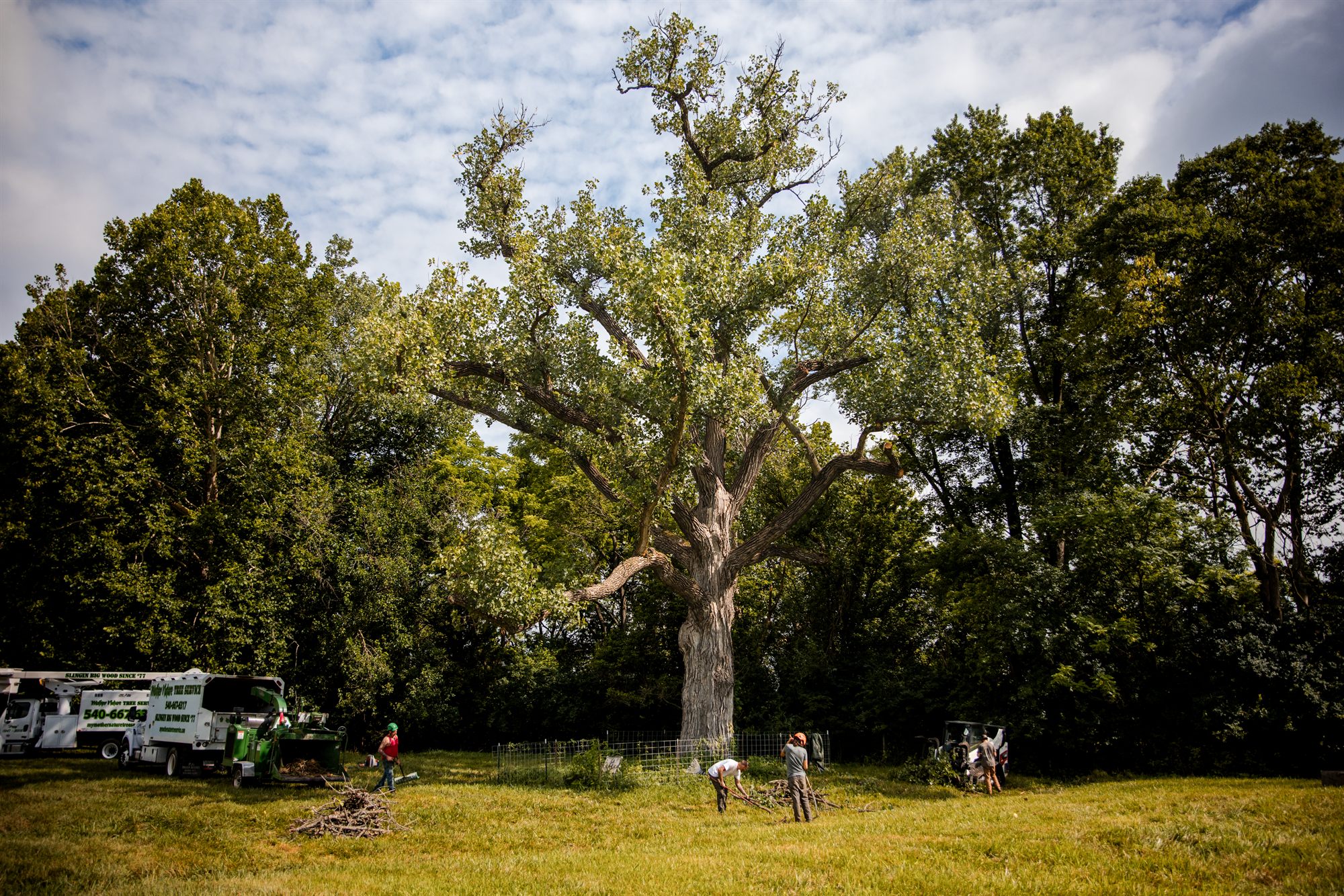
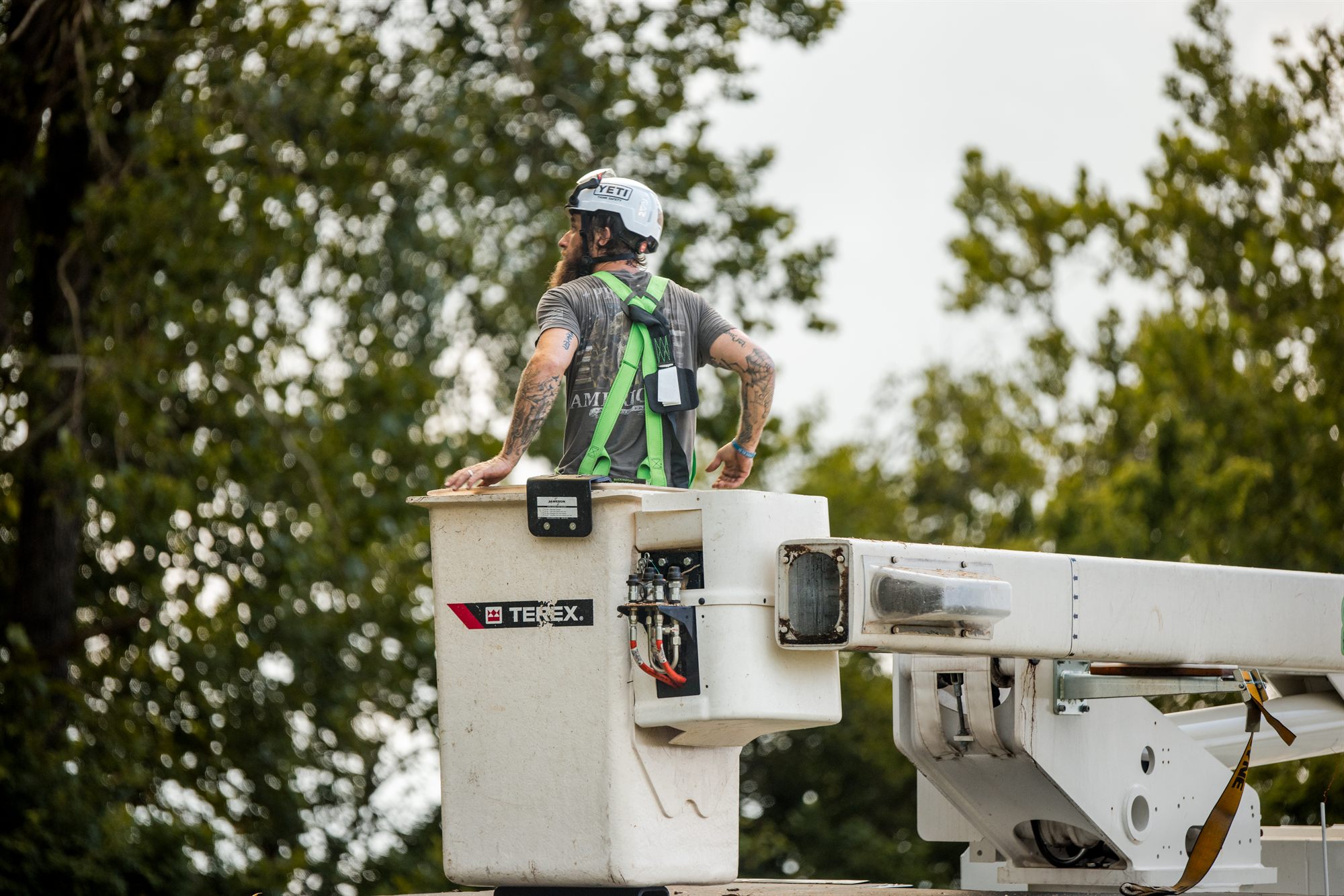
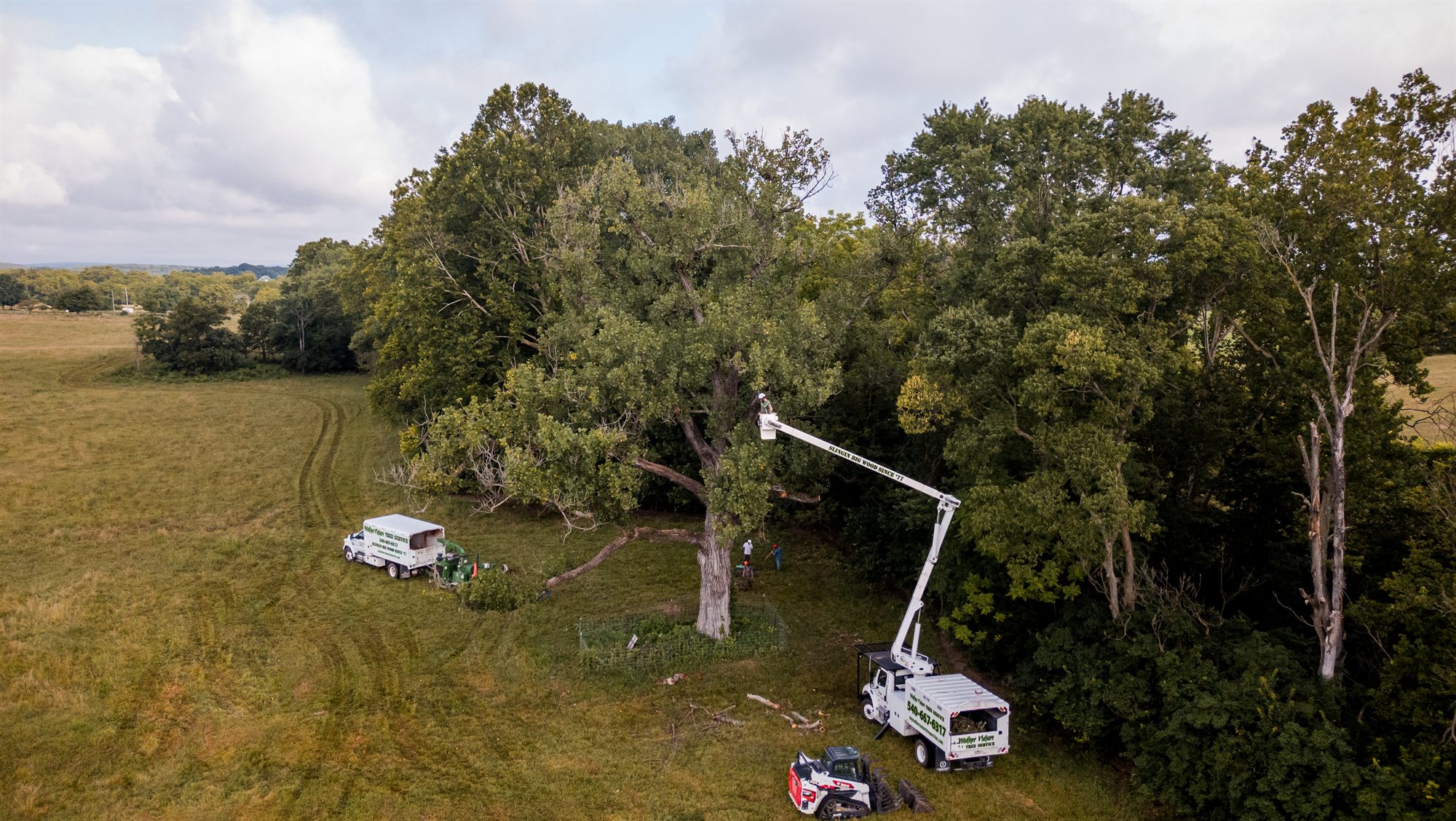
Most of this work goes on from a sprayer on the truck. If the tree is tall enough or tight enough that we have to put the bucket up to get real coverage, that adds time.
Access
Hose length has limits. A tree at the back of a fenced yard costs more to reach than one at the end of the driveway, same as it does on any other job we run.
How Many Visits
Bagworms are often one well timed application. A fungal problem in a wet spring may want two or three on a schedule. We tell you the whole number up front, not one visit at a time.
Estimates are free and we give you the number before anybody mixes a tank.
The Crew That Pulls in Your Driveway
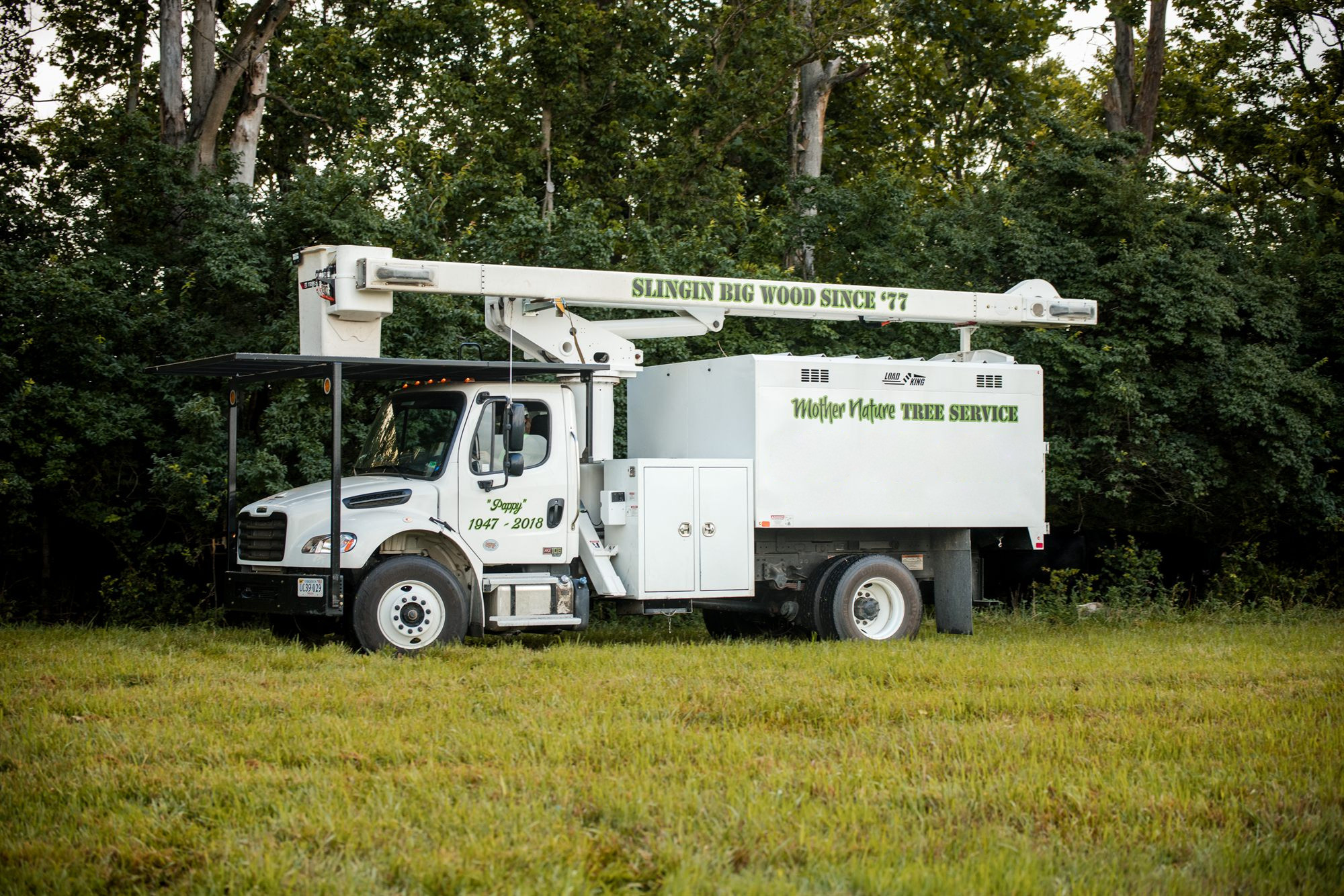
Family owned and working out of Berryville since 1977, which is forty nine years of looking after trees in Clarke County.
Fully insured, general liability and workers compensation, and we will send the certificate before we start if you want to see it.
Somebody answers the phone 24 hours. Call and we will walk you through what this work looks like on your property.
Straight Talk on Tree Health
Reading a declining tree
When a tree can stay
Is that tree safe? How to tell
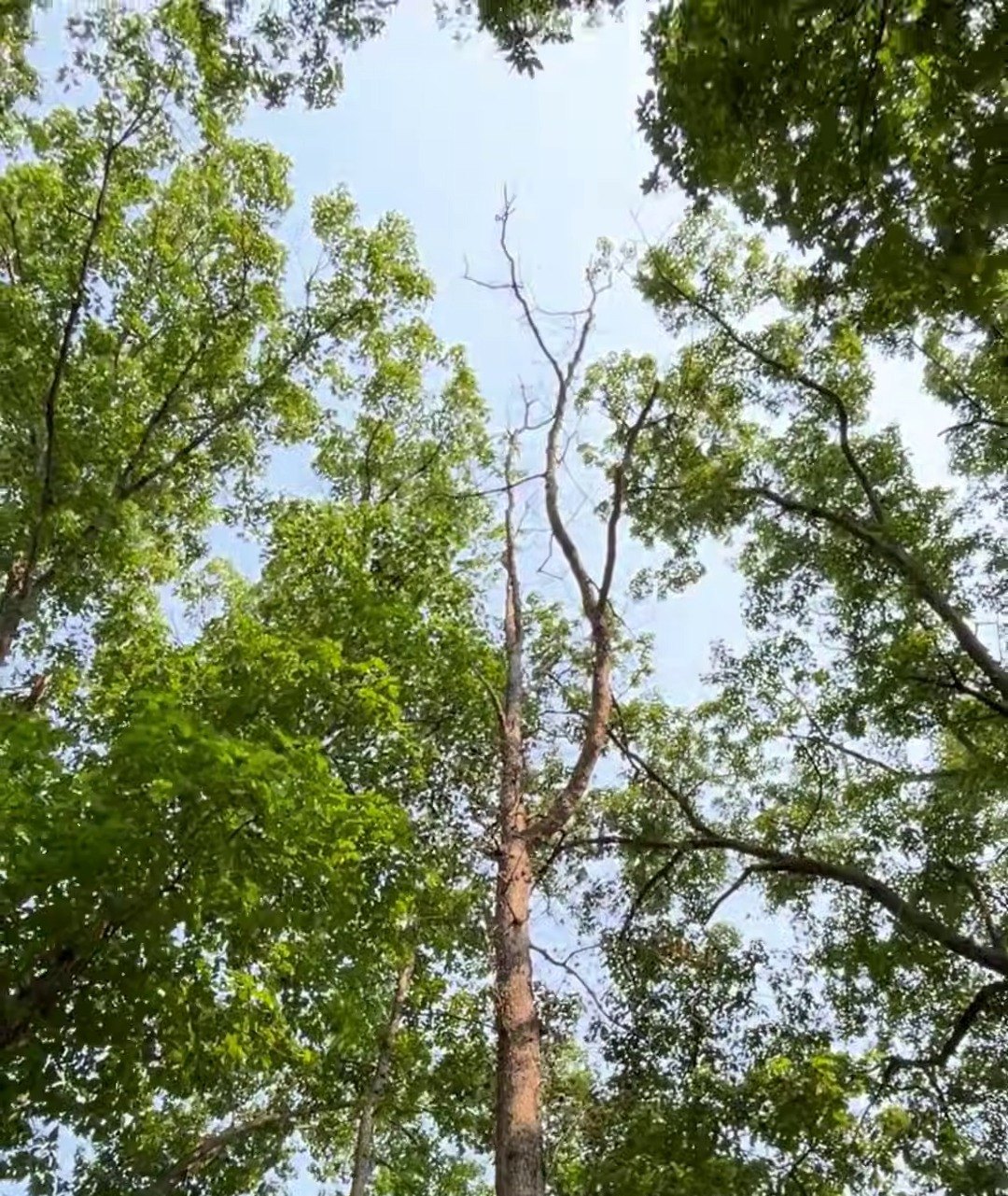
Reading the Canopy Before We Spray
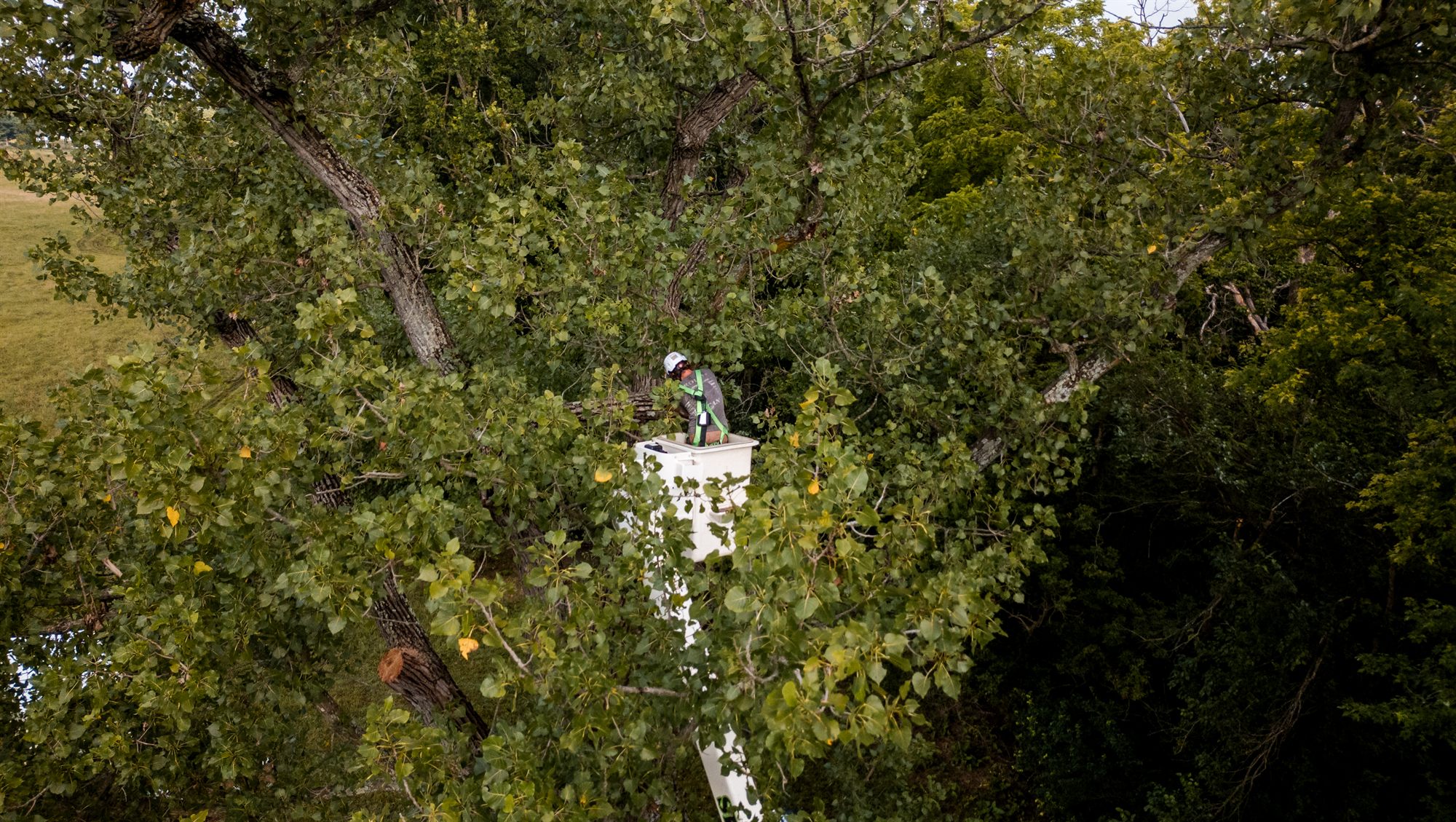
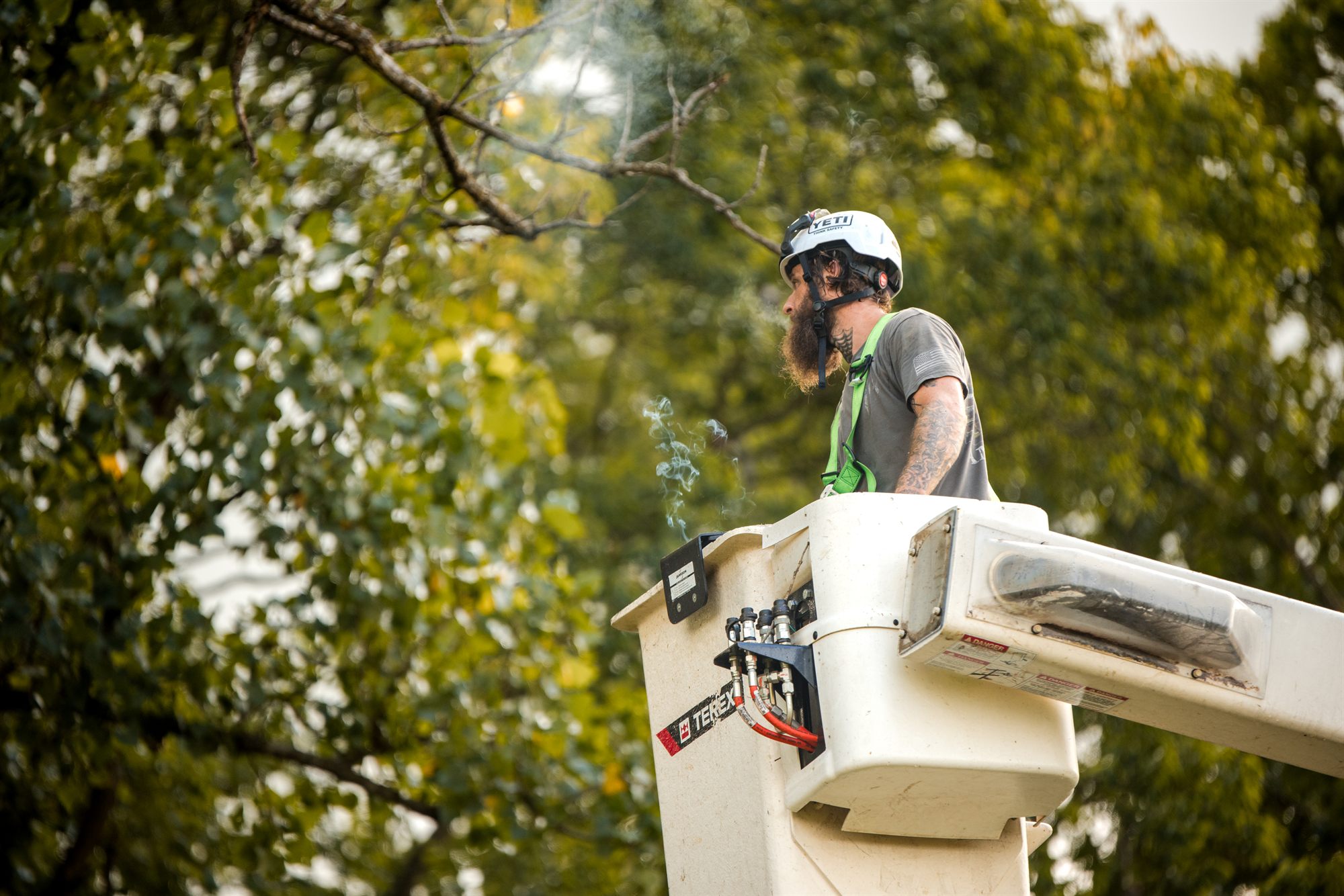
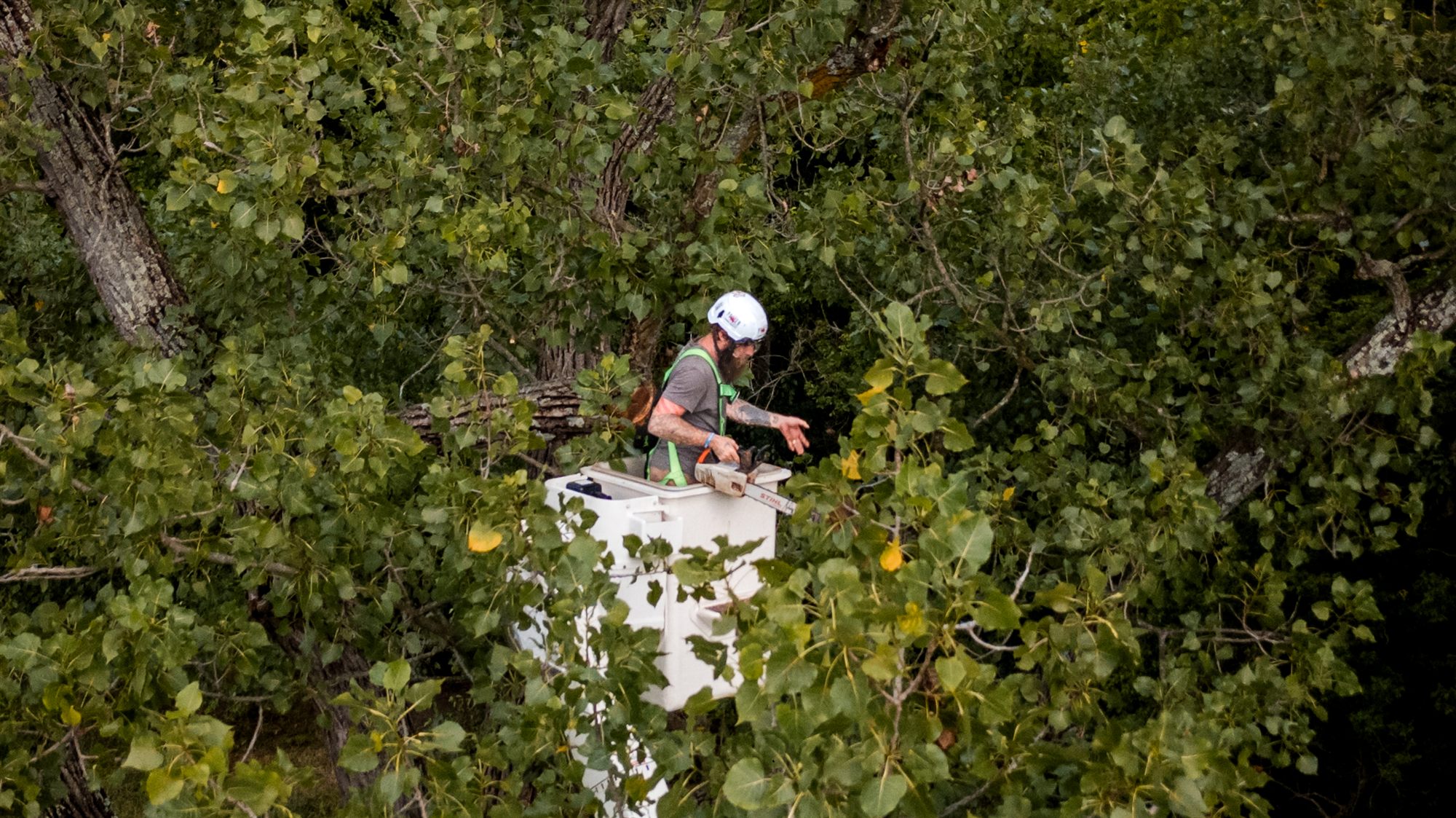
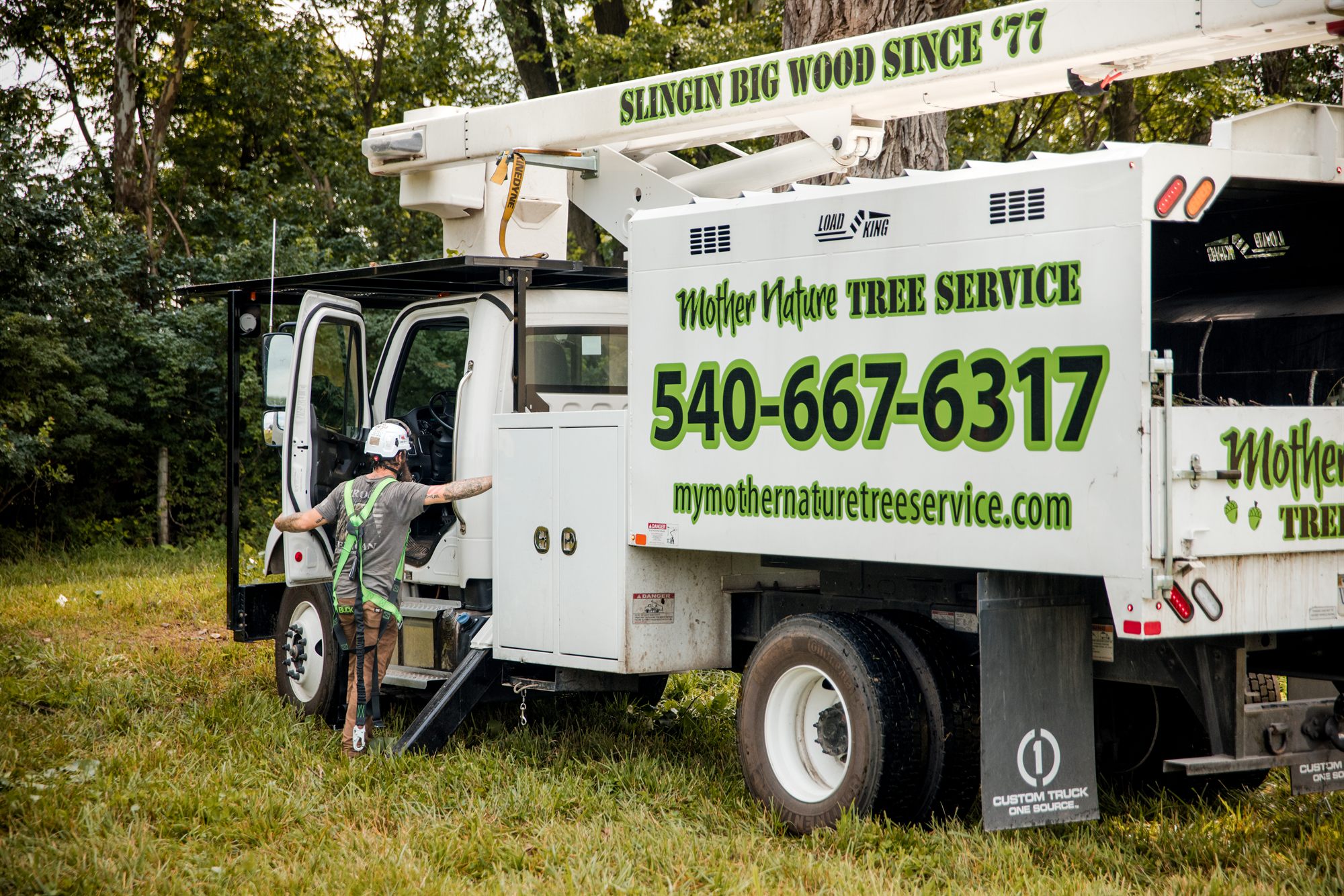
Diagnosis comes first. These are the trees and the crew behind the treatments.
4.9 Stars Across 190+ Google Reviews
Forty nine years of looking after trees in Clarke County, and the record is public. Read what your neighbors in Winchester, Berryville, Boyce and White Post have to say about how we work and how we leave a yard.
Read All 190+ Google ReviewsOther Work We Do
We Cover Winchester and the Valley
Questions About Tree Spraying
Call Robbie at (540) 514-7906.
- Is spraying safe around pets, kids, and pollinators?
We time applications to avoid bloom when pollinators are working, and we tell you exactly how long to stay off the area for the product being used. If you keep bees, tell us at the estimate and we will plan around it.
- How many treatments will I need?
Depends entirely on the pest. Bagworms are often one well timed application. Fungal problems in a wet spring may want two or three on a schedule.
- Can you treat a tree that is already losing leaves?
We can often stop it getting worse, but leaves already damaged do not repair. Most defoliation issues are cosmetic on an otherwise healthy tree, and the real answer is treating earlier next season.
- Do you treat for emerald ash borer around Winchester?
Yes. Emerald ash borer is established across Virginia and it has taken out a lot of ash in this part of the valley. Treatment only makes sense while the tree still has most of its canopy. Once the top is thinned out and the bark is splitting, the tree is usually past saving and the conversation turns to taking it down safely, because dead ash gets brittle fast and is genuinely dangerous to climb.
Tell Us Where You Are and We Will Take Care of the Rest
Call Robbie, tell him what the tree is doing, and we will come look at it and price it for free.
(540) 514-7906